
DIY & ecology
Build a compost bin from reclaimed timber: plan, assemble and maintain
A simple, dismantlable structure with an accessible front and a place to keep dry material.
Original Permah text · Adapt to your context · 3 min read
- Difficulty
- Intermediate · timber assembly
- Time to allow
- Allow half a day, excluding collection; planning estimate
- Budget planning
- Price after checking available timber and fixings
- Materials
- Known timber, uprights, outdoor fixings, tools and protection
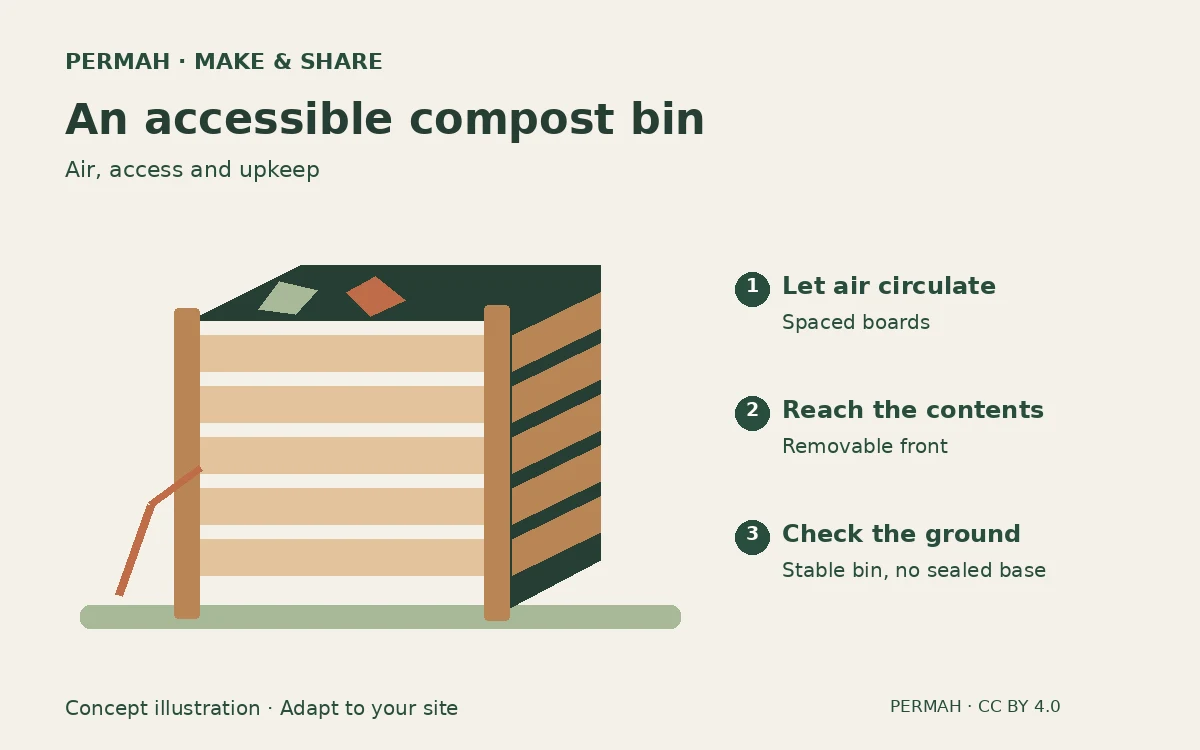
Start with the location and everyday use
A compost bin belongs to a daily route: bring scraps, add leaves, turn the contents and remove finished compost. Mark its footprint with stakes before building. Allow for an imaginary open door and carry a bucket along the route with the people who will use it. Choose accessible ground that does not flood and leave working space in front. A distant corner can be an awkward choice if getting there discourages regular use.
Gather materials before shopping
You will need sound boards of known origin without chemical treatment, four uprights, outdoor fixings, brackets and removable fasteners for the front. Gather a tape measure, pencil, square, saw, driver, clamps and protection appropriate to the tools. Reject painted, contaminated timber or wood with an unknown treatment. Reclaimed does not automatically mean suitable.
Our suggested arrangement has three fixed panels and a removable front. Dimensions depend on available timber, access and expected volume. This is an assembly approach rather than a dimensioned construction drawing: dry-fit parts before cutting and seek skilled help if the joints are unfamiliar.
Assemble in five stages
1. Measure usable lengths, sketch each panel and count fixings before buying. Remove nails, inspect the wood and smooth handling surfaces.
2. Lay the uprights for one side flat and attach the boards, leaving ventilation openings. Make the second side in the same way. Predrill where required by the timber or fixings.
3. Join both sides with the rear boards, check the angles and reinforce joints. Check that the empty structure resists distortion before filling it.
4. Build the front separately and attach it with removable fasteners reachable from outside. It should allow turning and compost removal without dismantling the entire bin.
5. Set the bin level on your chosen ground without a sealed base. Correct any tendency to tip. If a top cover is needed, keep it manageable and do not seal the bin airtight.
Keep the compost working
ADEME guidance emphasises varied materials, aeration and moisture management. Keep dry leaves or small woody material nearby. Begin with identifiable plant scraps and garden materials; extend accepted inputs using local compost guidance. If the contents become compact and unpleasant-smelling, examine excess moisture and lack of air. A calendar alone cannot establish maturity.
Share the work as well
Agree who brings scraps, turns the contents, checks conditions and removes compost. A notice can list accepted inputs and a contact person. After several weeks, review access, the removable front and workload: is one person doing everything? In the Permah community, share the dimensions you actually built and what you would change.
Sources and method
Original Permah guide. Organisational proposals and planning estimates are editorial; the references below document the cited principles. Sources checked on 16 October 2026.
Books to explore further
Descriptions based on publisher listings. Check edition and language before choosing.
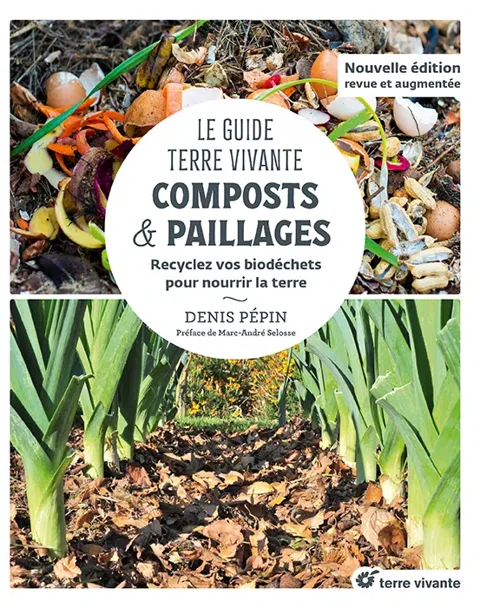
Le Guide Terre vivante — Composts & paillages
A guide to organic materials, composting systems and mulching. The publisher describes system choices, their limits and garden uses.
Publisher / author page ↗Search on Amazon ↗
Better Than New: Tips for Upcycling and Refinishing Furniture
An English-language book about transforming and refinishing existing furniture. The publisher presents fifteen projects covering preparation, painting and decorative techniques.
Publisher / author page ↗Search on Amazon ↗Equipment to compare for this guide
First check what you can borrow or reuse. Documentary selection; Permah has not physically tested these products.
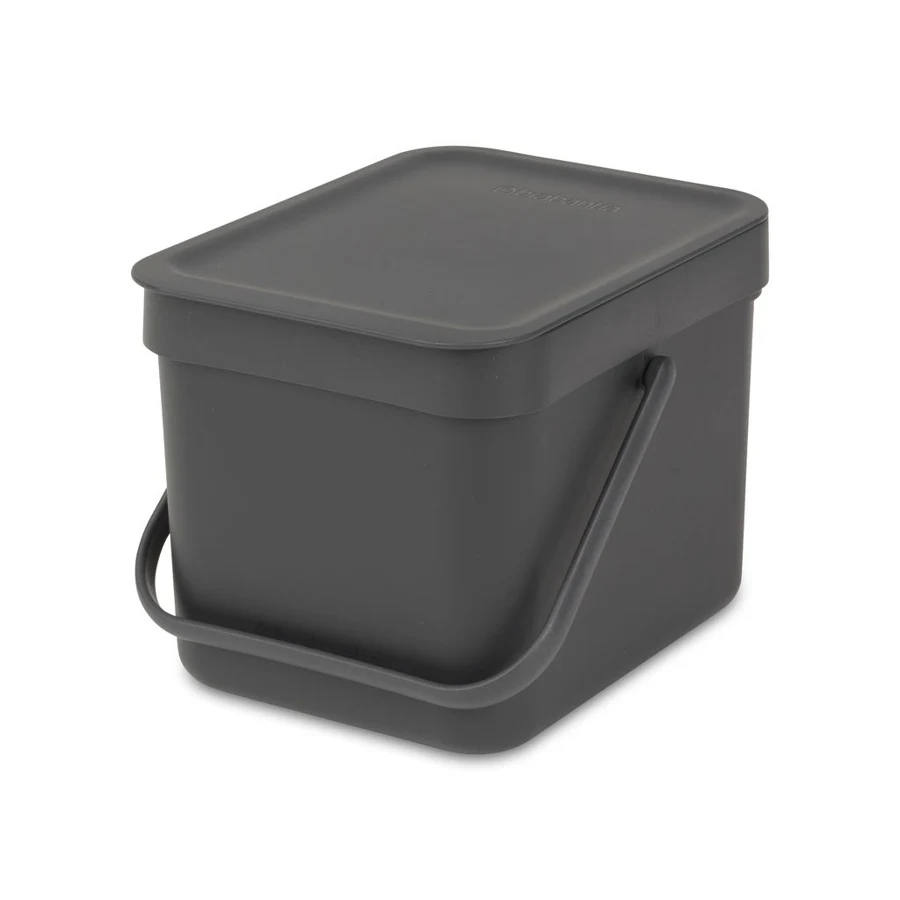
Compost
Brabantia Sort & Go 6 L
6 litre collecting bin; Grey version, manufacturer reference 109720.
Uses & things to check
For carrying kitchen organic waste to the compost.
A collecting container does not compost waste. Empty and clean it regularly.