
DIY & ecology
From garden to pantry: track harvests to limit waste
Connect fresh produce, processing and consumption with a simple lot-based inventory.
Original Permah text · Adapt to your context · 3 min read
- Difficulty
- Beginner · stock tracking
- Time to allow
- Initial inventory, then entries as produce is used
- Budget planning
- Labels and existing equipment; price preservation separately
- Materials
- Inventory, optional scale, labels and preparation references
First notice what gets lost
A forgotten courgette, a sudden glut or an undated jar does not always call for another recipe. Inventory fresh, chilled, frozen and prepared food already present. ADEME recommends checking stocks before shopping and making food that needs using soon visible.
The Permah proposal is to connect each harvest with what happens next. Aim for enough information to decide, without burdensome bookkeeping. Begin with one crop that produces a surplus.
Gather useful details
Use a scale if recording weight, labels and a way to take notes. For every lot record product, quantity, unit, actual date, location and state: fresh, chilled, frozen, canned, dried or another preparation. Separate different jar sizes into different lots or describe the size in notes.
Cost depends on equipment already available and the preservation method chosen. Inventory containers before purchasing more. Keeping records cannot validate preservation: home canning requires suitable equipment and recipes supported by reliable food-safety guidance.
Use lots in Permah
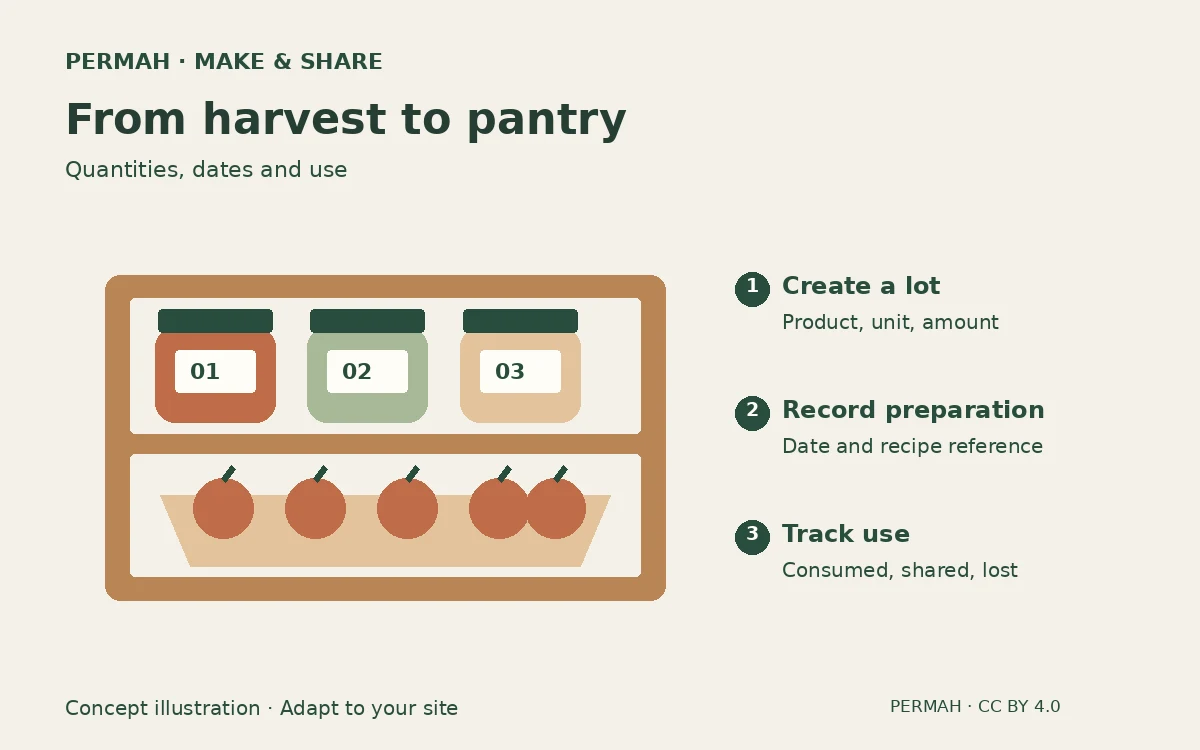
1. Record harvest quantity and date under Seasons & harvests. The stock link then lets you import part of that harvest.
2. Keep its original unit for the initial fresh lot. The application checks that cumulative imports do not exceed the recorded harvest.
3. For processing, select the source lot and enter the quantity used separately from output. An example of entering 3 kg used and 6 jars produced is neither a recipe nor a predicted yield.
4. Record consumed, given/exchanged or lost/discarded produce. Stock decreases in that lot’s unit; kilograms and jars are not added together.
5. Optionally set a personal review date. It supports organisation without becoming an automatically calculated food-safety deadline.
Date food without giving false assurance
Label jars with preparation date and recipe reference. French public health guidance notes that normal appearance or smell cannot establish absence of botulinum toxin. A refrigerated preparation is not automatically shelf-stable canned food. This article gives no thermal-processing schedule or universal storage life.
Feed experience back into the garden
After a chosen period, compare used, shared and lost amounts while keeping units separate. Ask why losses happened: quantity grown, available cooking time, poor visibility or nobody to receive surplus? These observations can inform future sowings.
Offer suitable surplus in the community with clear product and handover details. Share your organisational experience and difficulties while keeping addresses and recipient information private.
Sources and method
Original Permah guide. Organisational proposals and planning estimates are editorial; the references below document the cited principles. Sources checked on 16 October 2026.
Books to explore further
Descriptions based on publisher listings. Check edition and language before choosing.
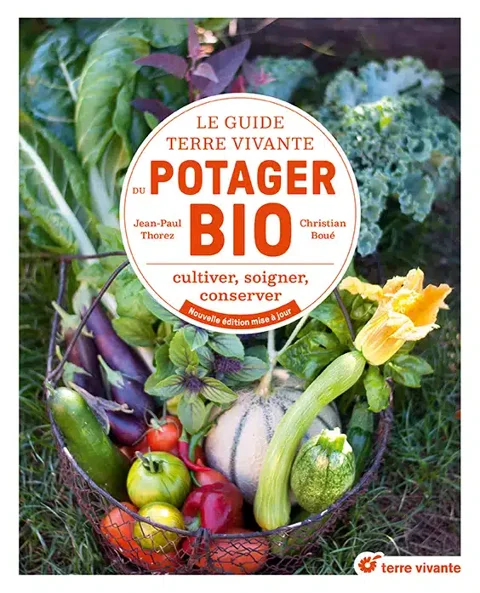
Le guide Terre vivante du potager bio — Nouvelle édition
A guide from sowing to storing harvests. The publisher’s contents include French climate zones, seasonal work and calendars: references to adapt to your own garden.
Publisher / author page ↗Search on Amazon ↗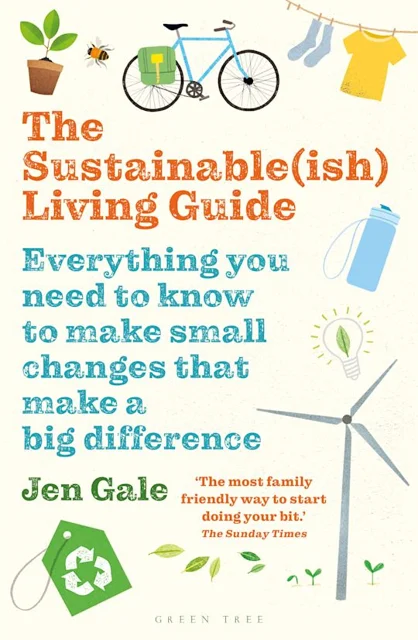
The Sustainable(ish) Living Guide
An English-language guide to everyday changes in consumption, food, home and family life. Description based on the publisher’s contents and listing.
Publisher / author page ↗Search on Amazon ↗Equipment to compare for this guide
First check what you can borrow or reuse. Documentary selection; Permah has not physically tested these products.
Harvests & reserves
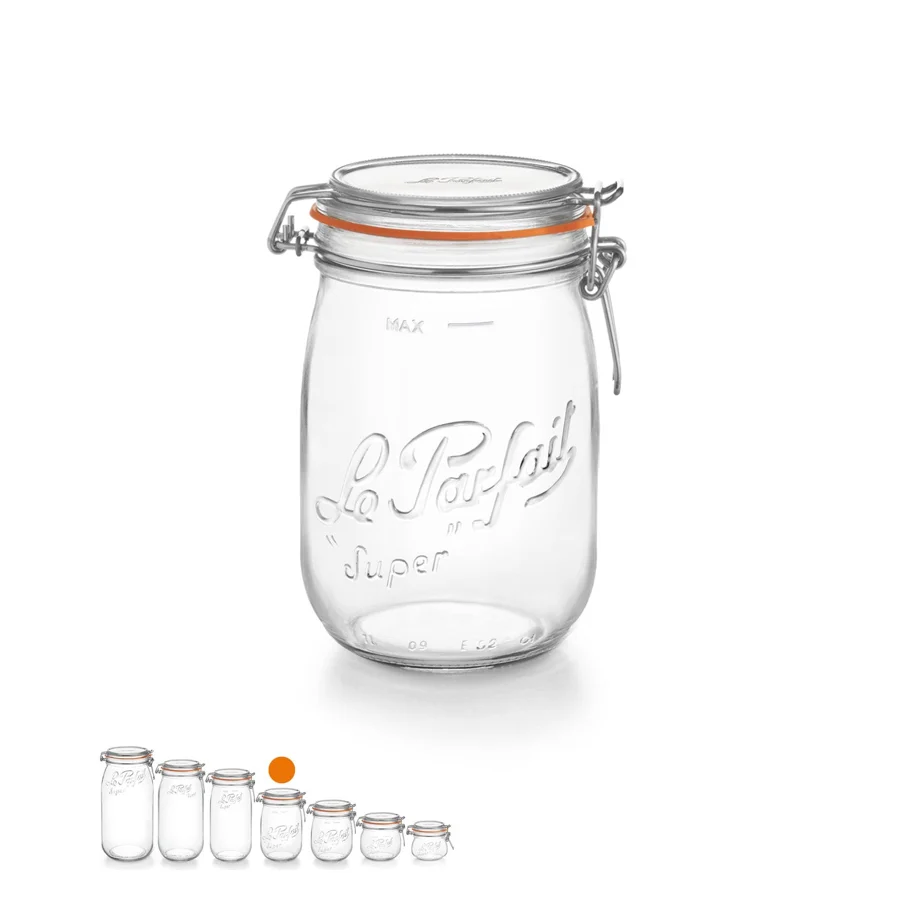
Le Parfait Super · lot de 6 bocaux de 1 L
Six Super jars of 1 litre each. Manufacturer image: jar and range sizes.
Uses & things to check
For organising reserves and identifying batches in Permah stock tracking.
A jar does not guarantee safe preservation. Follow a validated recipe and process for the food, and check seals.