Foundations
Where does human permaculture begin?
You do not need to change everything. Start by noticing what actually happens.
 Permah✳
GROUND TO CULTIVATE
Ideas to read and experiments to adapt to your context.
You do not need to change everything. Start by noticing what actually happens.
Notice support, constraints and room for change in your week.
Prepare a conversation that leaves room for an answer.
Anticipate, decide, do and check: make household work visible.
Rethink a fragmented day without demanding impossible concentration.
A small reliable network is more useful than unlimited promises.
Observe actual use before buying things or reorganising the whole home.
Separate the problem, the proposal and the concerns.
Test an idea without turning your life into a permanent project.
Cooperation does not mean accepting everything or ignoring power.
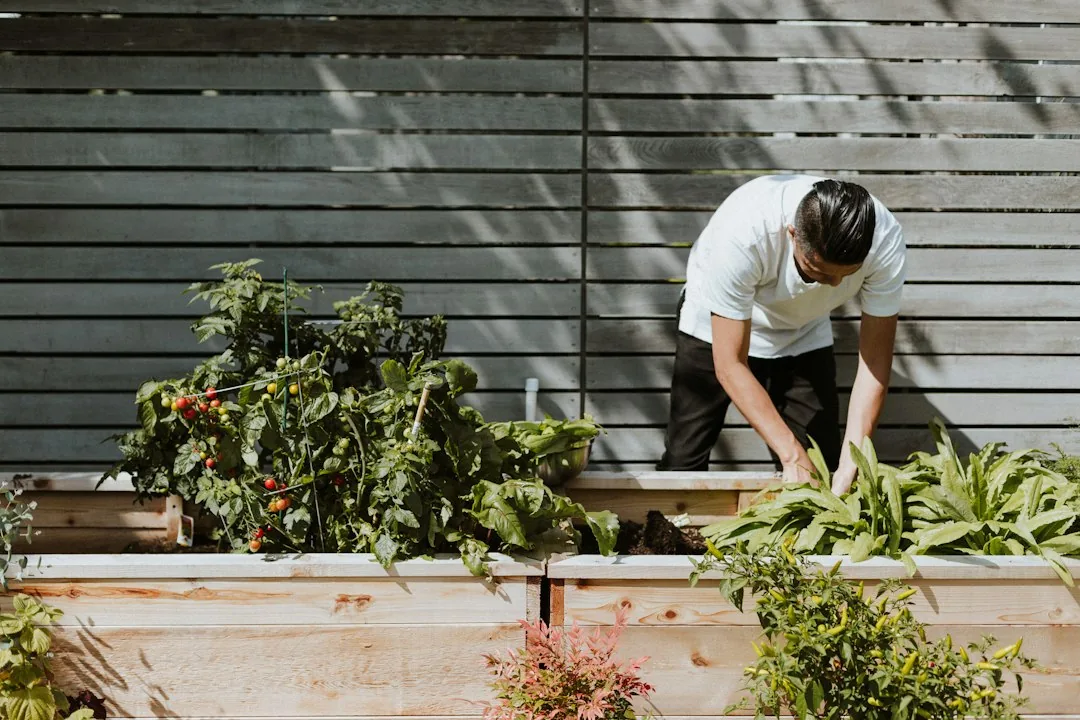
Area, light and water: take stock before sowing.
Clarify expectations before discussing a plot or a plan.
Emotions, engagement, relationships, meaning, accomplishment and health: understand PERMAH and our connection with human permaculture.
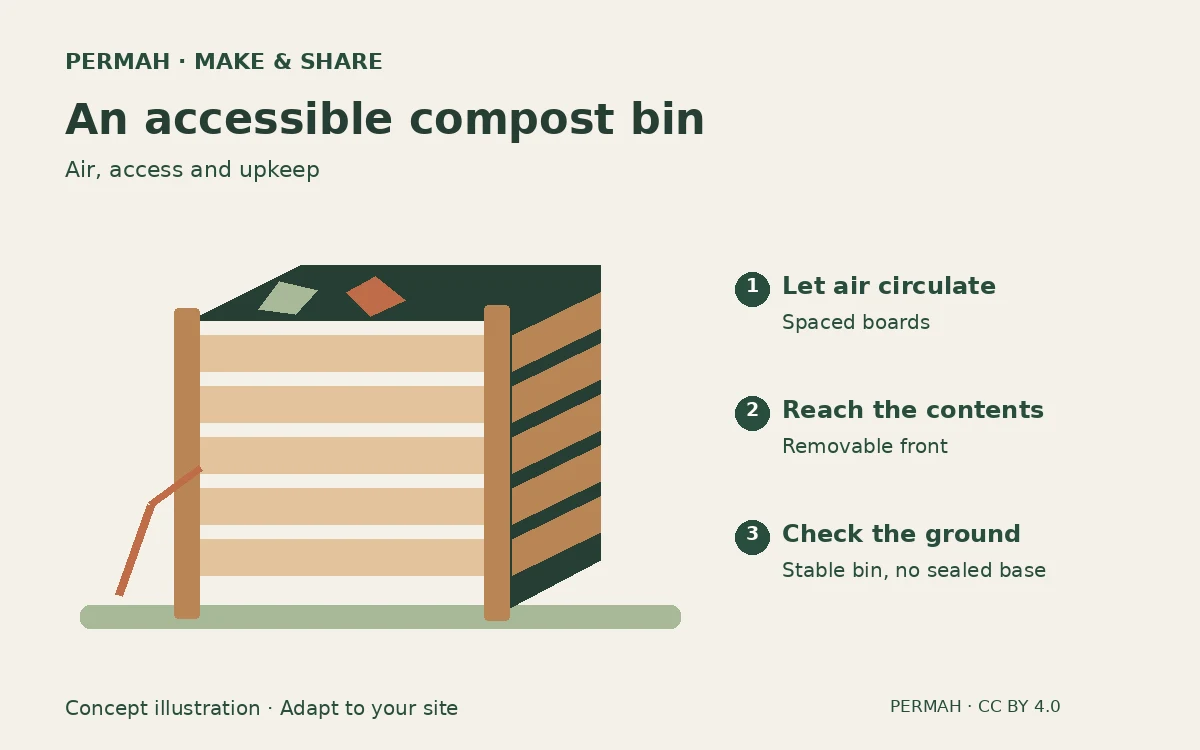
A simple, dismantlable structure with an accessible front and a place to keep dry material.
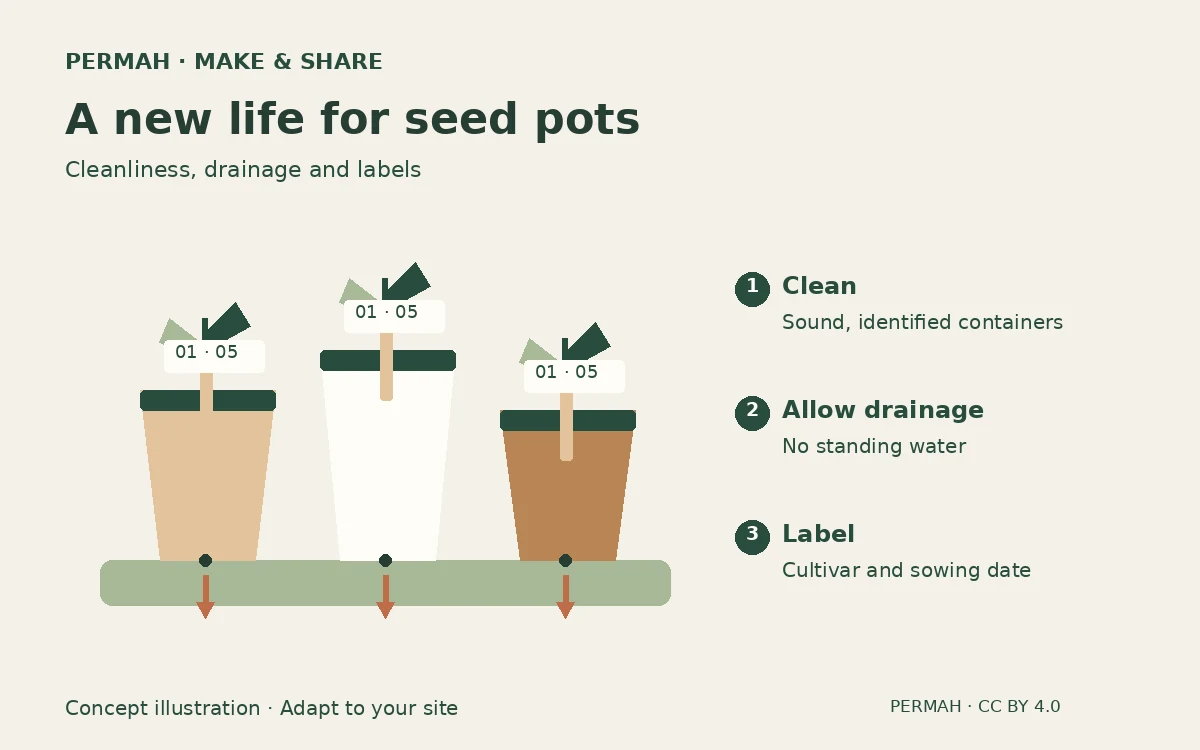
Choose pots, check drainage and record your trials before expanding your seed sowing.
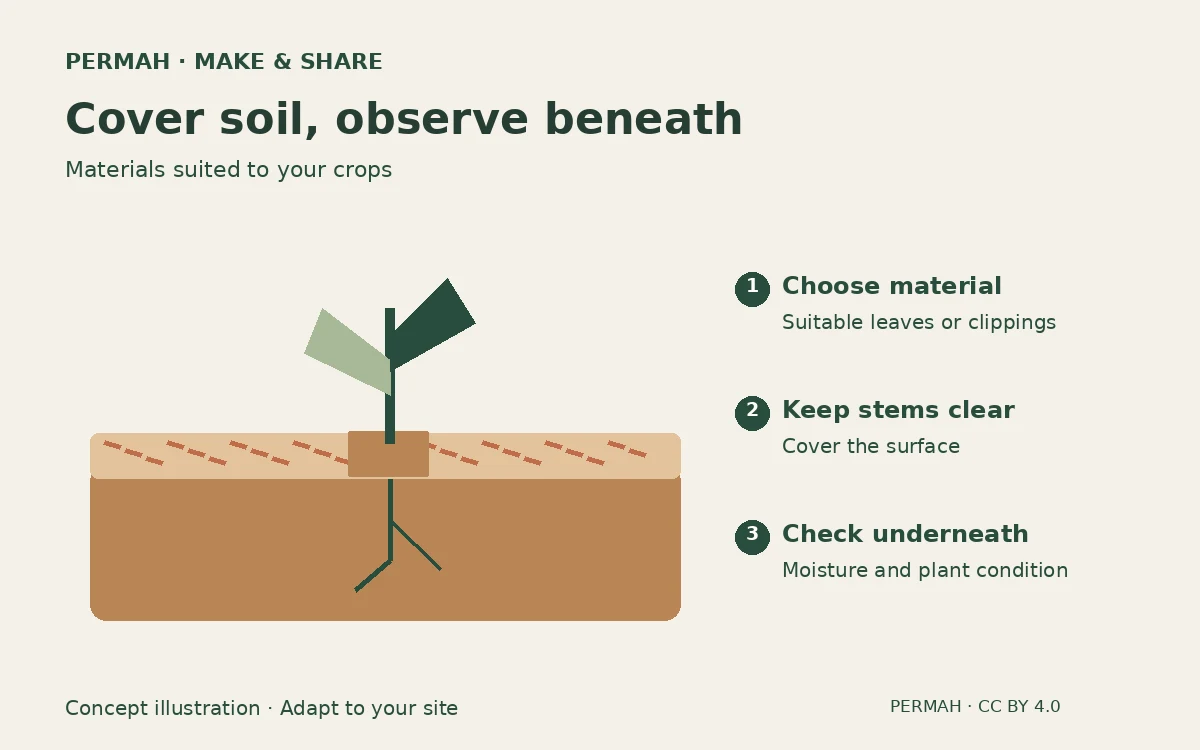
Identify available materials, cover a small area and adapt mulch to crops and season.
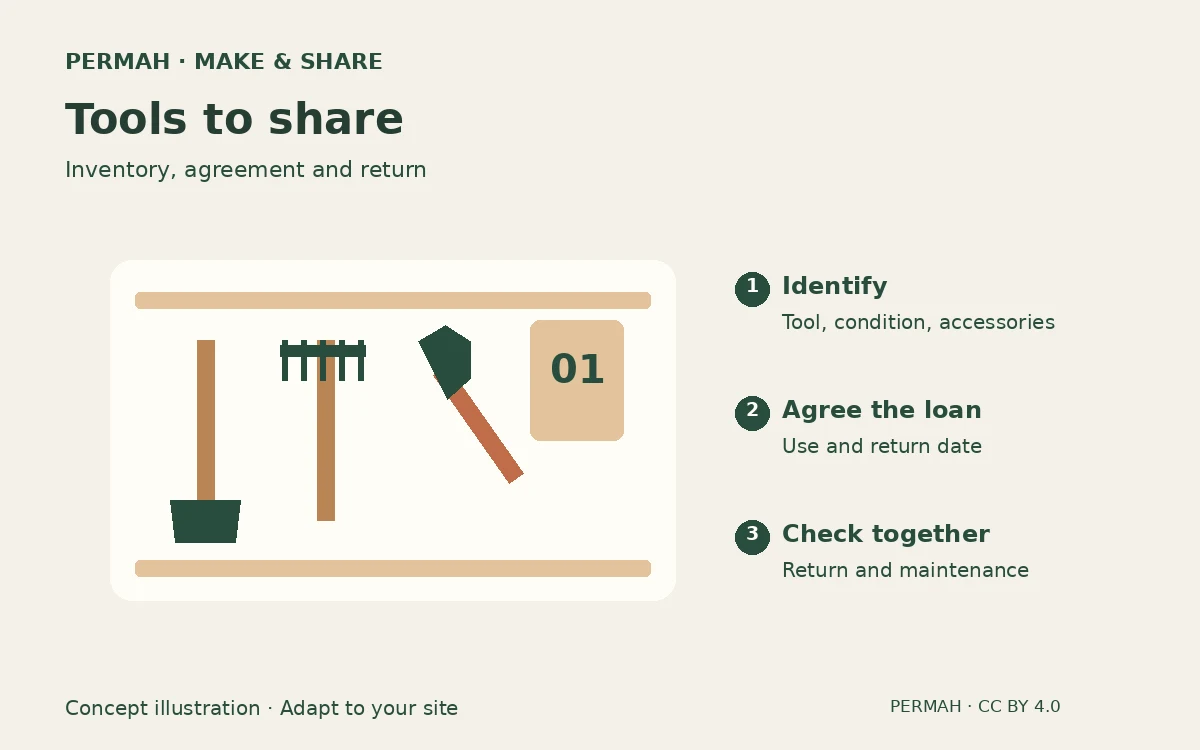
Start sharing with a small inventory, return arrangements and a limited trial.
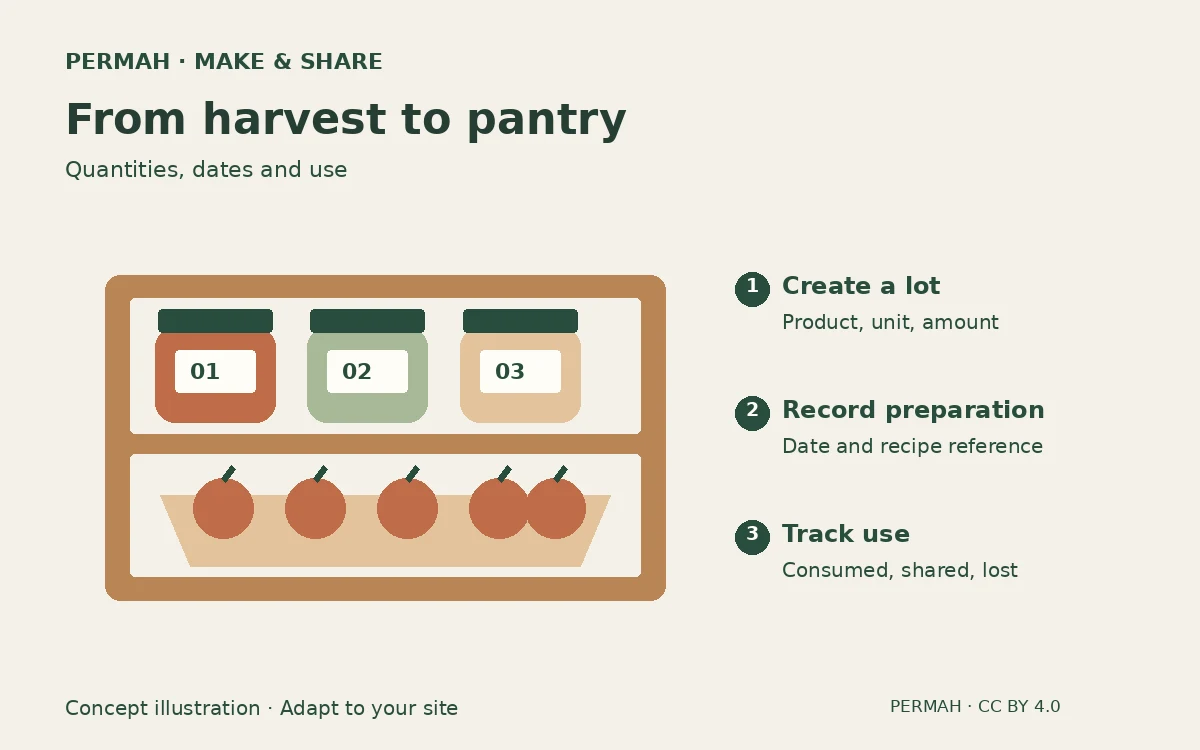
Connect fresh produce, processing and consumption with a simple lot-based inventory.
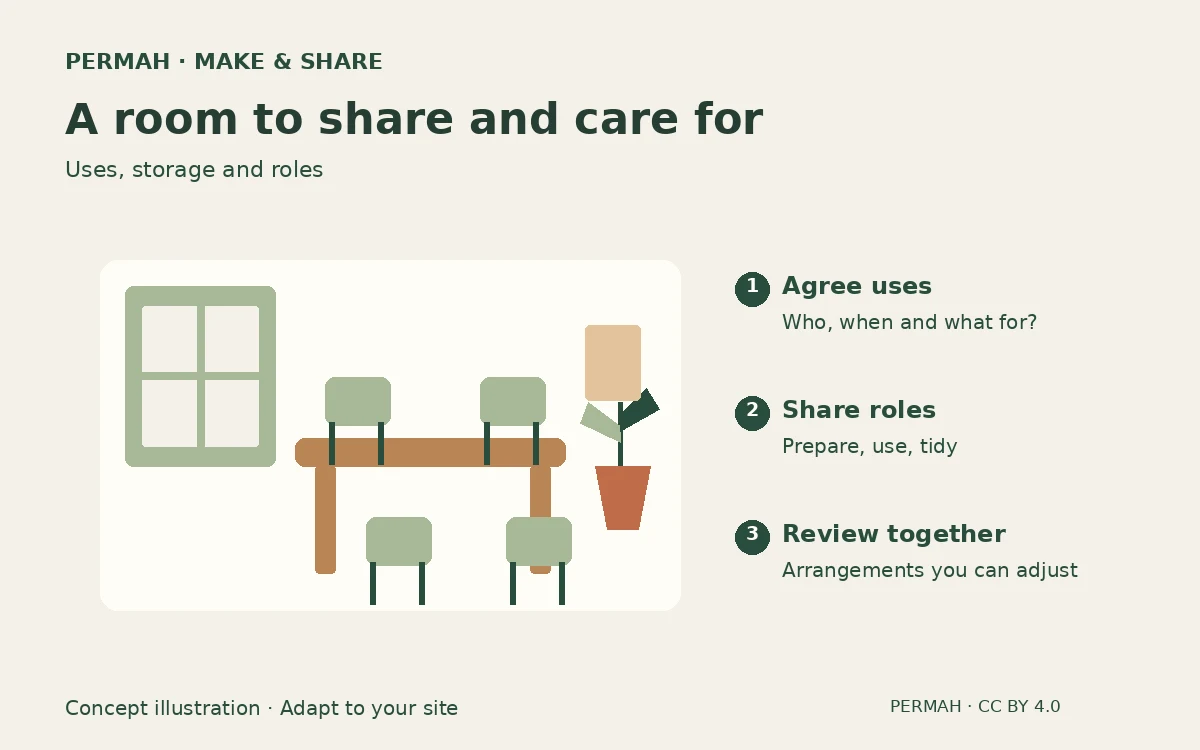
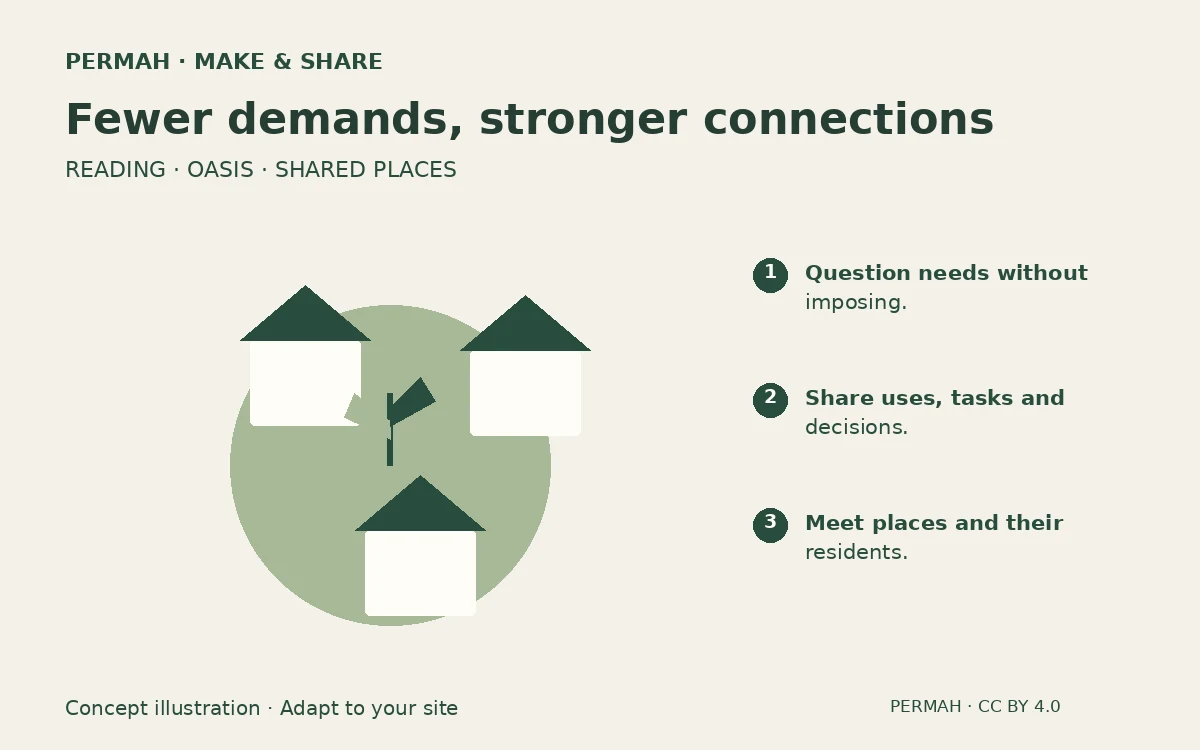
Clarify needs, upkeep and decisions so a communal room stays genuinely shared.
From Pierre Rabhi’s writing to shared ecological places: connect needs, living systems and cooperation.
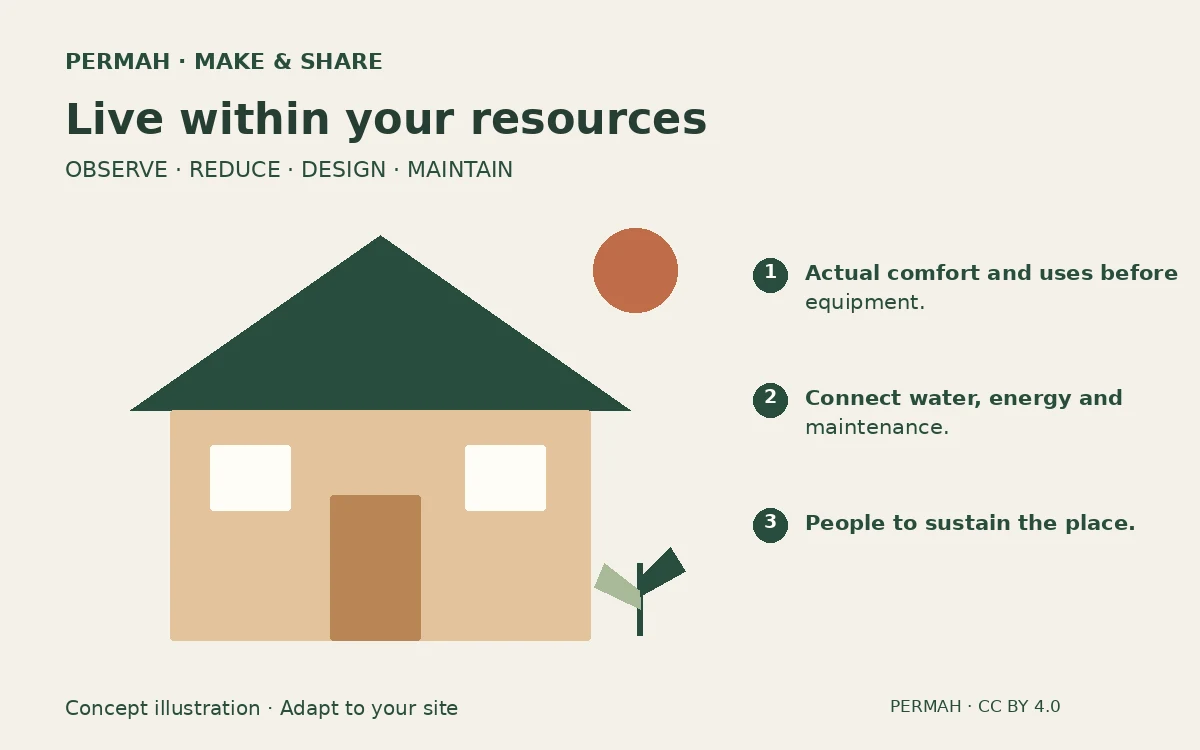
Water, energy, comfort and organisation: build a coherent project from real experience.
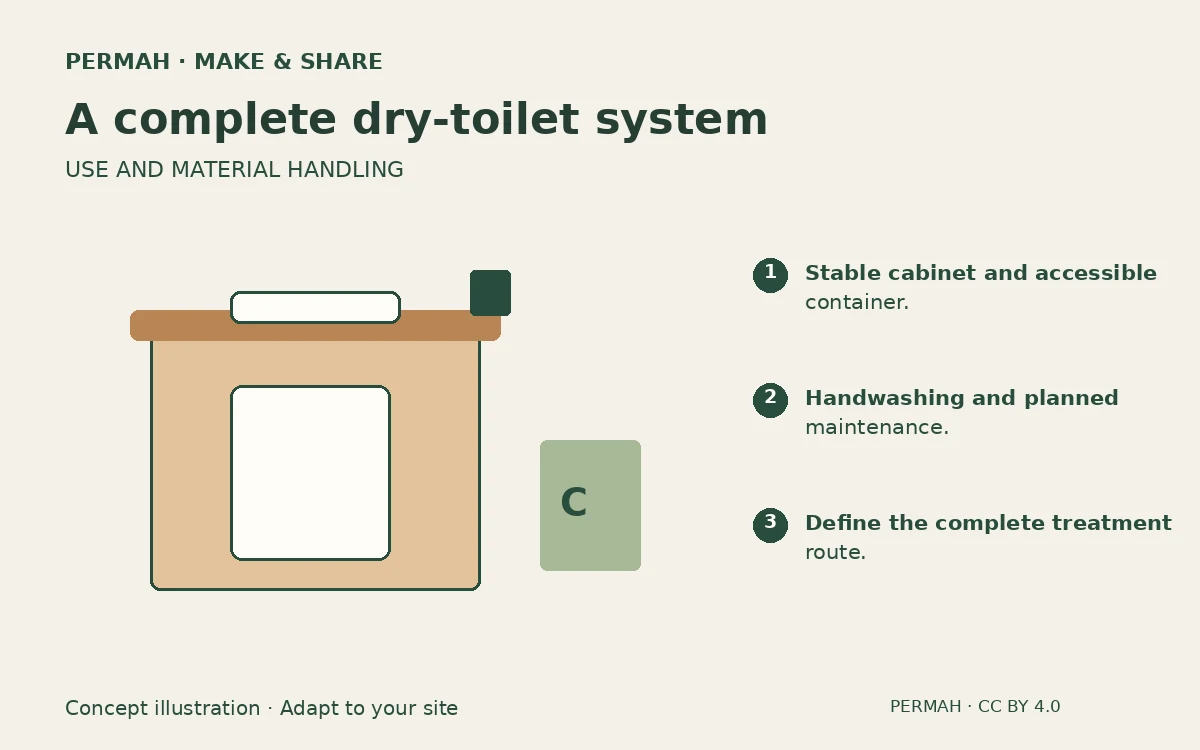
From system choice to maintenance: design the whole chain, not just the cabinet.
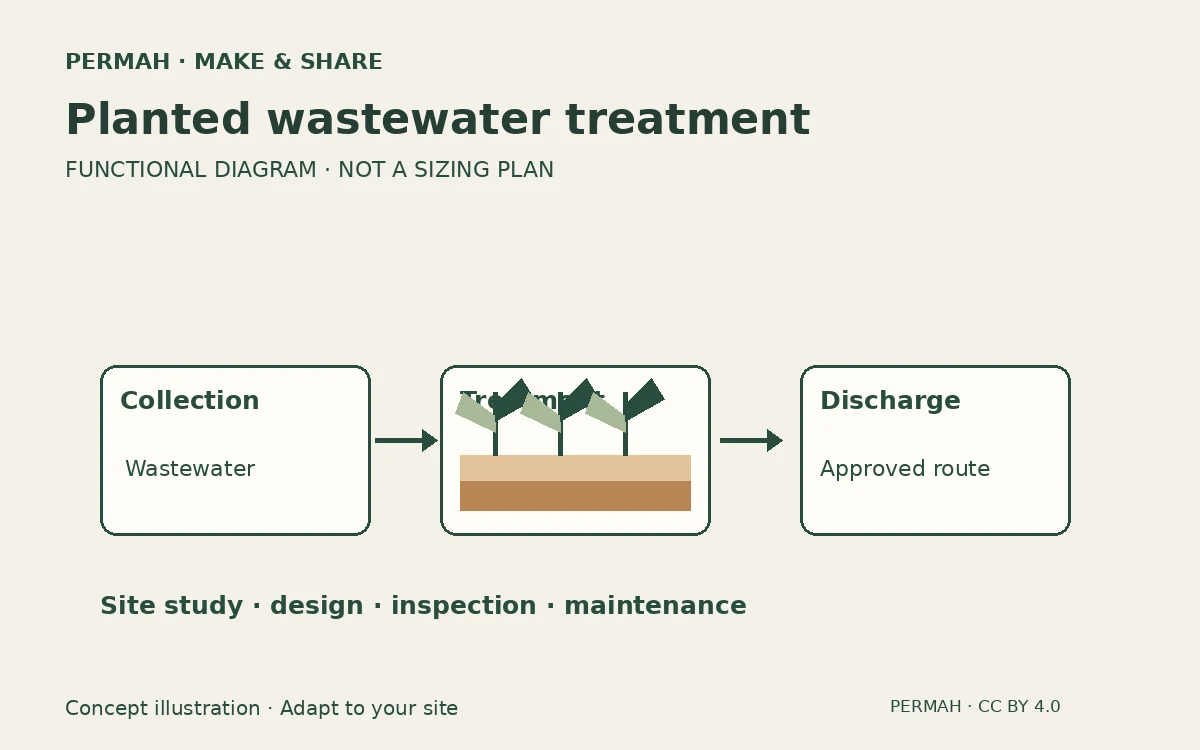
Understand planted filters, gather site information and arrange checks before construction.
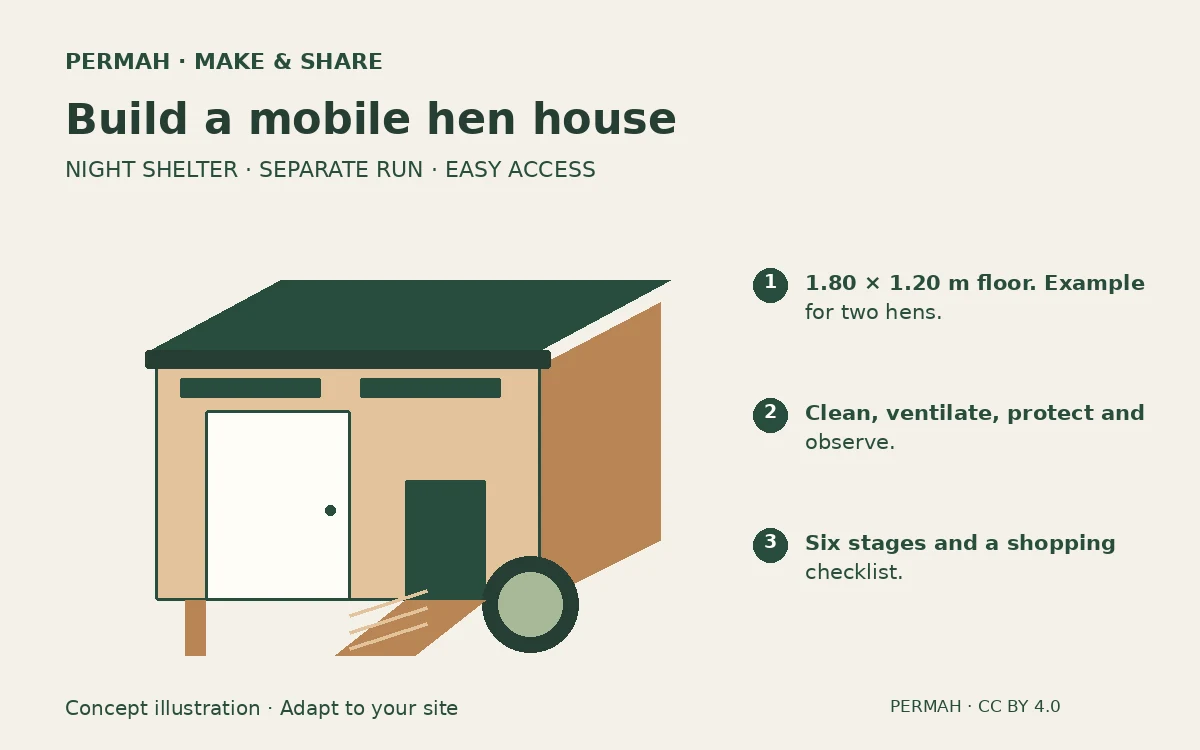
A wheeled shelter, six illustrated steps, a timber cutting list and a shopping checklist.